Battery System — KRATOS Solar Car II.
Lighter, composite-cased redesign of the KRATOS battery for the iLumen European Solar Challenge 2022 — same 1300 cells, far less weight, safer disconnection.
- Year
- 2022
- Role
- Battery Engineer
- Domain
- Energy
What it does
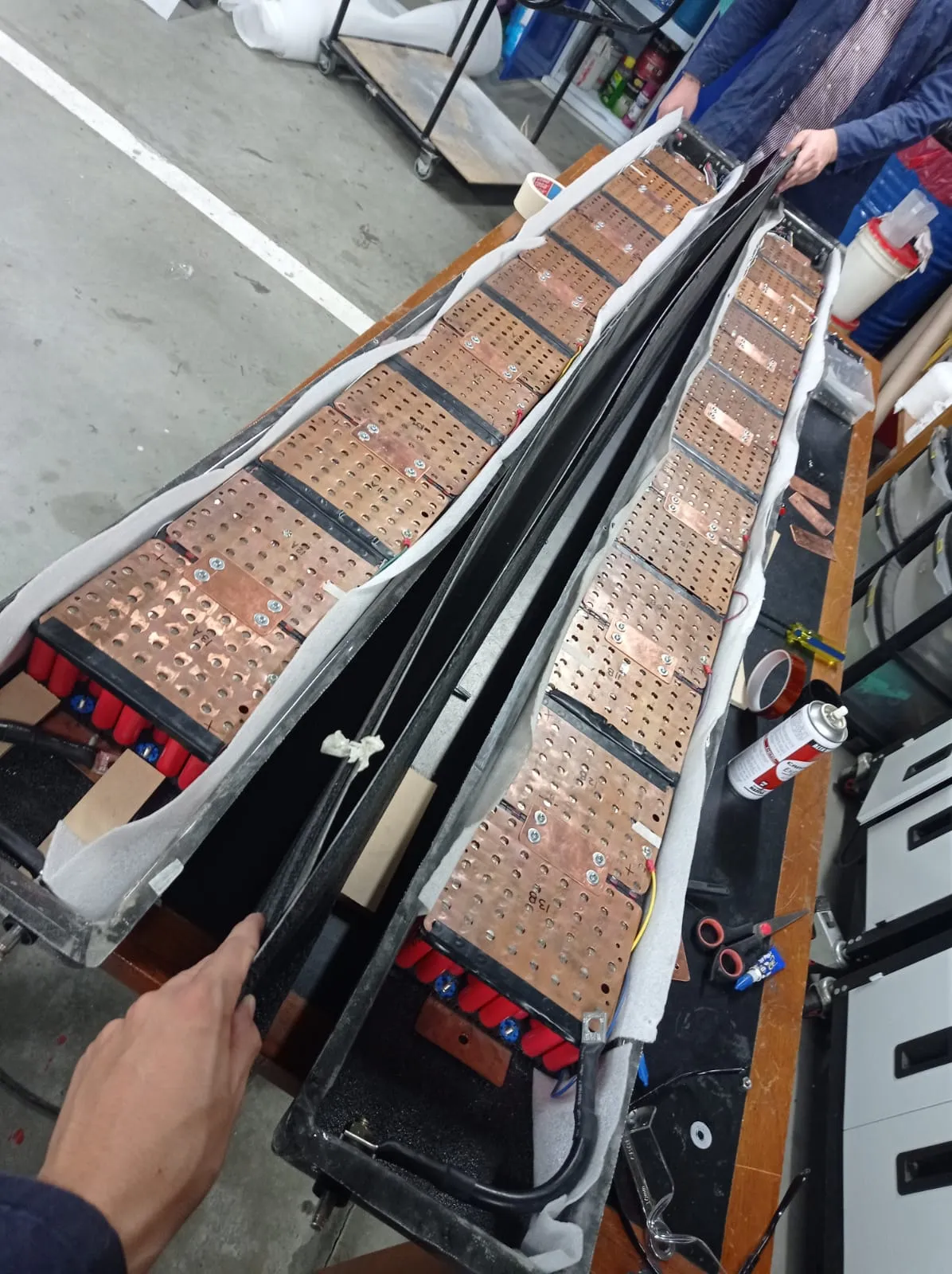
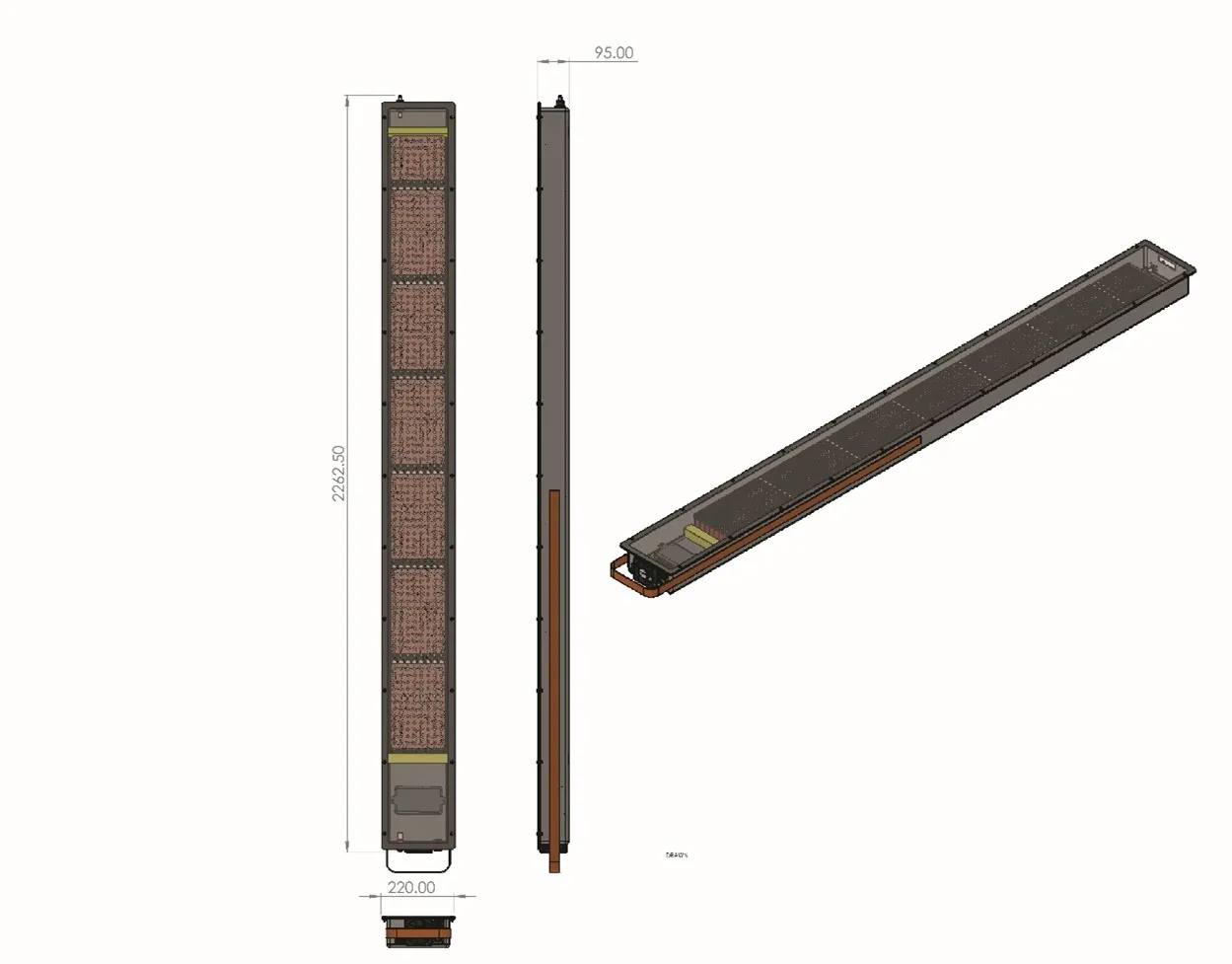
This is the second-generation battery system built for KRATOS Solar Car II, the EAFIT University entry to the iLumen European Solar Challenge 2022, designed and built with a podium finish at iLumen 2022 as the explicit race goal. The cell chemistry stayed the same — 1,300 Panasonic NCR18650GA Li-ion cells reused from the previous campaign — but everything wrapped around them was redesigned with two priorities: shed weight, and make assembly and field disconnection safer and faster. The result is two physically separated battery packs that run along the bottom of the chassis, a composite case in fibreglass and carbon fibre, CNC-machined copper interconnects, and waterproof high-power automotive connectors at the boundary of each pack. Compared to the first-generation pack, the new geometry frees up internal volume for the rest of the powertrain and makes the battery noticeably easier to disconnect at the side of the track when minutes matter.
How it’s structured
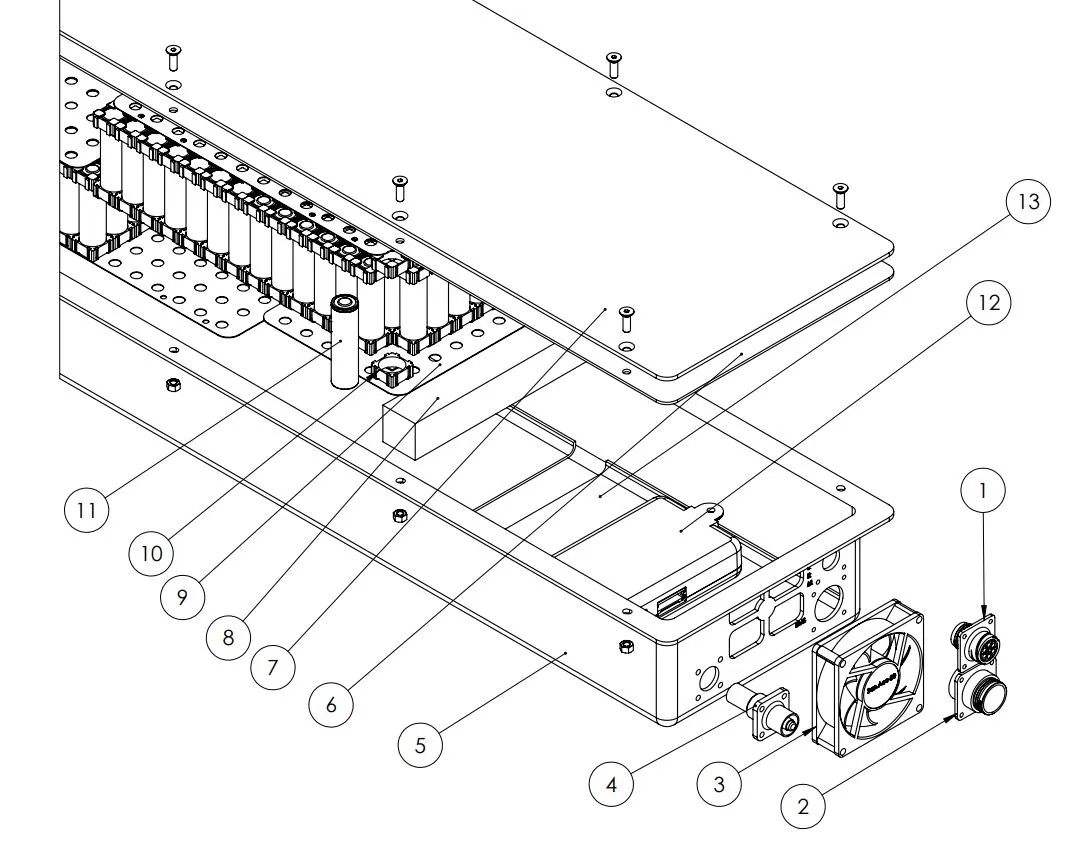
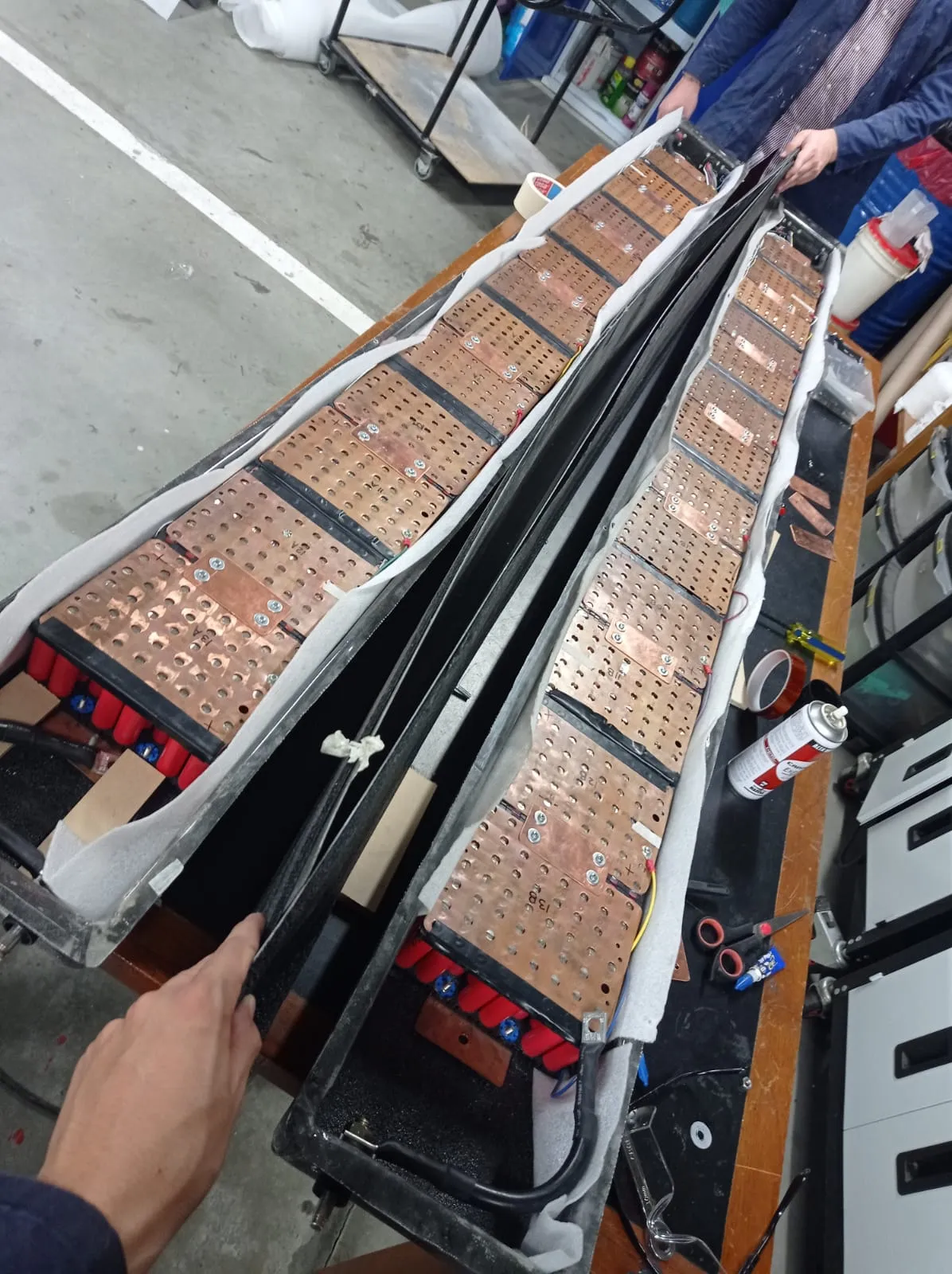
The architecture splits the 1,300 cells across two packs that sit at the bottom of the chassis and run along its length, which lowers the centre of gravity and makes service access straightforward. CAD modelling drove the form factor, since the new case had to thread between the chassis members instead of sitting in a single rectangular volume. Cell-level interconnection moved away from the previous season’s metal case and metal busbars: this version uses CNC-machined copper sheets bolted to nickel cell tabs (99 % purity, optimal for spot welding), carbon-fibre and fibreglass composite walls, and external connectors chosen for their automotive heritage. The copper sheet thickness and width are sized for currents up to 300 A with a deliberate safety margin, so that the interconnect rather than the cell becomes the limiting factor under fault conditions. Holders are used to keep the 1,300 cells aligned during assembly so that the spot welder can land repeatable joints between each cell tab and the copper sheet, and so that field rework on a particular cell does not require disassembling the entire pack.
How it works
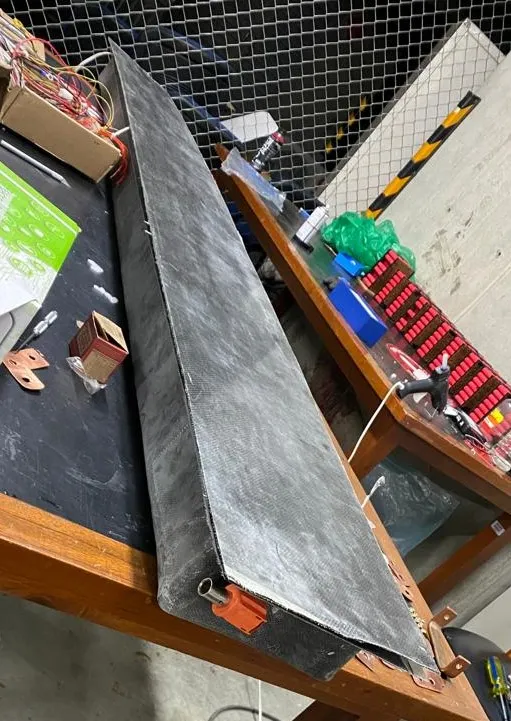
The build process starts from CAD: the new case geometry is modelled, then a mould is produced in MDF and used for multiple scale tests so that the team can use the minimum amount of resin, prevent resin pooling, and avoid stress concentrators in the finished part. Once the composite case has converged, the copper interconnect sheets are designed against the current loads — sized for safety up to 300 A — and CNC machined so that the soldering pattern lines up cleanly with the cell tabs.
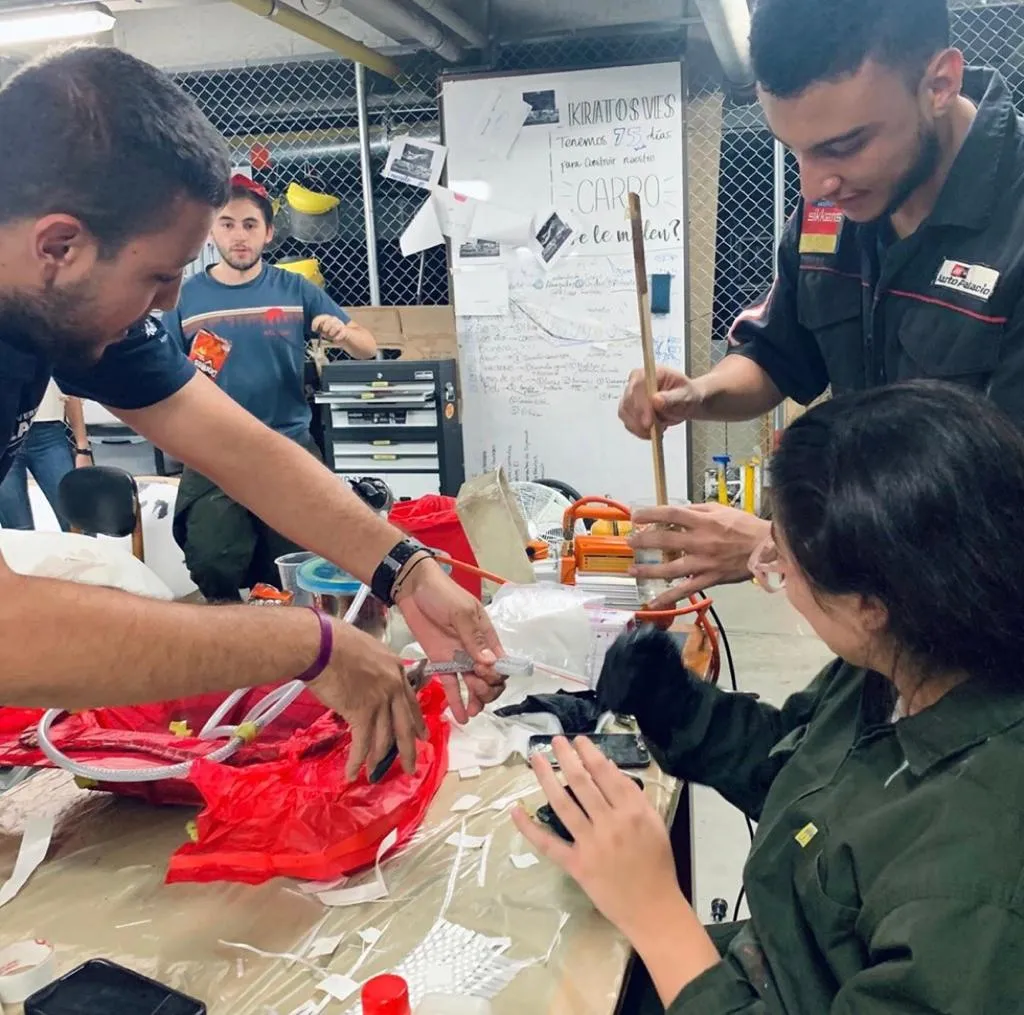
Cells are loaded into holders, the nickel cell tabs are spot welded to the copper sheet, and the populated sheets are then assembled into the larger pack inside the composite case. Finally the high-power automotive connectors close out each pack and let the vehicle’s high-voltage side plug and unplug without exposing live conductors.
What I learned
The biggest lesson was that the second-generation battery was less about better cells and more about better packaging: keeping the cells from a known-good first campaign let us focus all of our effort on weight reduction, manufacturability and serviceability, and the result was a noticeably lighter and safer system. Working with composites taught me how much earlier you need to think about manufacturing — building a soft MDF mould and running scale tests before committing material kept us out of the trap of designing a beautiful part that no one could actually lay up. Choosing automotive-grade waterproof connectors at the architecture stage was the single highest-leverage call: it changed the team’s race-day workflow from a careful, slow disconnect to a fast and confident one, which is exactly what a 24-hour endurance race rewards when the explicit race goal is a podium finish at iLumen 2022.
This second-generation battery was a team effort with Juan Pablo Giraldo, Luis Felipe Gómez, Daniel Valenzuela and Andrés Arteaga, who shared the design, build and trackside testing required to take a known cell pack and redesign everything around it for the 2022 campaign.